A Big, Interesting Problem
- December 31, 2025
- By Suzanne Koziatek
- 4 minute read
PhD alum leads the hunt for solutions to complex organ transplant challenges
Executive AI Summary
-
Brendon Cummiskey (MSBA 2018, PhD 2021) applies his organizational behavior training from WashU Olin as a behavioral scientist at UNOS, focusing on improving complex, time-critical organ transplant decisions.
-
His NIH-funded research aims to increase the use of donated lungs—currently largely underutilized—by testing a scoring system to guide donor management and support surgeons’ decision-making.
-
The project reflects Olin’s emphasis on interdisciplinary, real-world problem-solving and stewardship of scarce healthcare resources, marking a major milestone in Cummiskey’s research career.
Powered by AI/ChatGPT
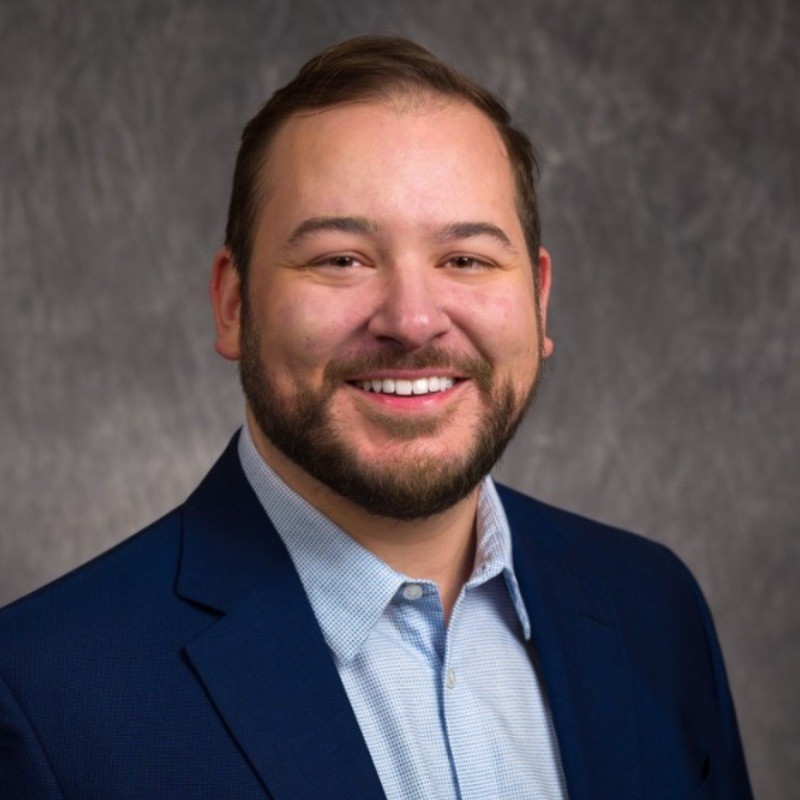
Brendon Cummiskey, MSBA 2018, PhD 2021, had a straightforward but open-ended goal after earning his degrees from WashU Olin. “I just wanted to work on complex and meaningful problems,” he said.
Today, he applies his skill set in organizational behavior to one of the most complex systems in healthcare: organ transplantation. As a behavioral scientist for the United Network for Organ Sharing (UNOS), Cummiskey is leading research into how to make faster, better-informed transplant decisions. His current project seeks to improve the utilization of donated lungs. It’s a critical challenge: Currently, 75% of potential donor lungs aren’t utilized, partly because of surgeons’ reservations about how they were handled.
Cummiskey’s team is testing a scoring system for potential lung donations that can point to the best ways to manage deceased donors for optimal lung utilization. “The idea is that if donor hospitals have the score available to them, they might think differently about how they are managing donors.”
This is a gift of life, and we have to take really good care of it.
—Brendon Cummiskey, Behavioral Scientist, UNOS
Supported by a National Institutes of Health R01 grant, Cummisky and UNOS are partnered with WashU Medicine’s transplant surgeon Dr. Varun Puri and a surgeon at Duke University’s School of Medicine. Their next steps are to survey transplant surgeons and organ procurement teams about the use of the scoring system and also to simulate potential organ offers to see how transplant surgeons would respond.
It’s his first outing as a coprincipal investigator for an R01 grant — a significant milestone in a researcher’s career.
“I’m ecstatic about it, honestly, and it’s professionally satisfying to have WashU be the med school to be working with,” he said.
Cummiskey’s leadership on this project is a testament to how Olin’s emphasis on real-world problem-solving can help graduates achieve crucial goals in the health arena, particularly in getting the best use of scarce resources.
“One of our values is stewardship,” Cummiskey said. “Not just the idea that this is a gift of life, and we have to take really good care of it. That’s true, and it’s important. But we also need to be good stewards with the funds we’re given.”
After earning a bachelor’s degree in psychology, Cummiskey came to Olin for his doctorate, drawn by its organizational behavior program and by the complex realworld problems he could tackle. “In a business school, you have working professionals in your classes who are bringing actual problems to you.”
He and his wife, who earned her MBA at Olin, moved back to their home state of Virginia, and Cummiskey started looking for a job where he could apply his skill set to make a difference.
“And then I found UNOS,” he said. “It turns out that organ transplant is unbelievably complicated and is a really big, interesting problem to sink your teeth into. It was an awesome opportunity.”
In his role at UNOS, Cummiskey works to better understand organ transplant decision-making.
“Usually, the goals are just trying to get folks to make better decisions faster,” he said. “Because if you can get through the decisions more quickly, that will improve transplants and outcomes. In transplants, time is really, really critical because the condition of an organ matters greatly.”
He said the interdisciplinary aspect of his organizational behavior focus at Olin has been invaluable in his work.
“It really is trying to pull together pieces across fields such as psychology, statistics, and behavioral economics to get insights, to understand human behavior, to try to understand what we use to nudge people in meaningfully helpful decisions.”
Among the advantages of his current research project is the potential for a visit to St. Louis. “I really loved Olin. It was a beautiful place to be, a beautiful place to learn.”
About the Author
Suzanne Koziatek
Media inquiries
For assistance with media inquiries and to find faculty experts, please contact Washington University Marketing & Communications.
Monday–Friday, 8:30 to 5 p.m.
Sara Savat
Senior News Director, Business and Social Sciences