Exec Ed alums create positive ripple effect in organization
- February 16, 2026
- By Suzanne Koziatek
- 4 minute read

The value of WashU Olin’s executive education programs doesn’t end with the individual leaders they help to inform and shape.
A well-trained leader can have a ripple effect, spreading a strategic approach or a collaborative style to others around them.
And multiple good leaders in one organization? They often create a powerful dynamic like the one found in WashU Medicine’s Institute for Informatics, Data Science and Biostatistics (I2DB), where multiple faculty and staff leaders have taken leadership training at Olin.
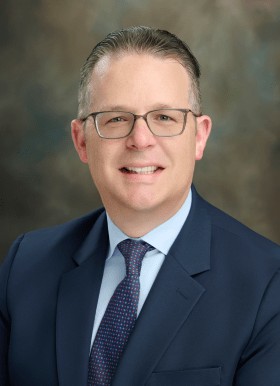
It started with Philip Payne, vice chancellor for biomedical informatics and data science, who earned Olin’s Advanced Management Certificate (AMC) in 2019. Based on his positive experience in the program, he encouraged his chief of staff, Cynthia Marich, to take Olin courses as well. She went on to earn the AMC and then participated in Olin’s Women’s Leadership Forum.
Marich, in turn, saw opportunities for other leaders in I2DB. “Between the Women’s Leadership Forum and the Advanced Management Certificate, we’ve had close to 10 faculty and staff leaders go through programming at Olin,” she said.
A rigorous approach and a long-lasting network
WashU Olin’s executive education offerings allow companies to develop their leadership pipelines in a highly individualized way, through course options that pinpoint specific skills.
The Advanced Management Certificate program can be built to suit a student’s needs and interests. Topics include strategic decision-making, effective coaching, and promoting collaboration.
The Women’s Leadership Forum is targeted toward helping women recognize and develop their leadership potential.
I learned there’s a science to many of the challenges that I faced, whether it was how we build effective teams, or how to think about strategic planning, or how we negotiate when we have a difficult situation to navigate.
Philip Payne
Payne said the courses he took through the Advanced Management Certificate offered him well-supported leadership strategies from Olin faculty, which appealed to his science background.
“I learned there’s a science to many of the challenges that I faced, whether it was how we build effective teams, or how to think about strategic planning, or how we negotiate when we have a difficult situation to navigate,” he said. “It was helpful because it gave me some tools to backstop things I was trying to do intuitively. It gave me a little more structure.”
He said the program filled what he saw as a gap in his preparation for a leadership role.
“I’ve spent my entire career in a variety of leadership positions, but as a scientist, I had never actually been trained to work effectively as a leader,” Payne said. “Like many people in operational leadership, it was my technical skill set that contributed to ending up in a leadership role, but it was also completely immaterial to being able to succeed in that role.”
The expertise offered by Olin’s faculty were only part of the value that he and Marich derived from their executive education experiences. Both said their classmates were important sources of knowledge and ongoing connection.
Payne appreciated the insights from his fellow students, many of whom came from completely different industries. And he has continued to maintain ties with some of them, which has come in handy at times.
“One of the relationships I built there led to a collaboration between Olin and the medical school that contributed to our ability to navigate the pandemic and to manage our surgical and intensive care resources,” Payne said.
Marich said the connections she made in her programs, particularly the Women’s Leadership Forum, have continued to enrich her career and her life. She recounted how on the first day of the forum, she sat in the front row, next to a woman who would become one of her closest friends.
“In addition to the practical learnings from Olin, I think one of the greatest gifts is just having a friend, someone who understands what it's like to be a female leader and navigating some of the same issues but in a different industry,” Marich said. “We like to joke that our inclination to arrive early in order to get a seat in the first row brought us together.”
A team with a common language
As more members of Payne’s and Marich’s team have taken courses through Olin’s executive education programs, Marich said it’s made the group more effective.
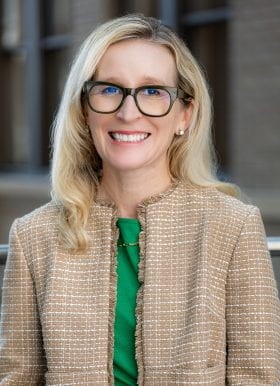
“One thing I really appreciate is that we all have a common framework and language, so whether we’re dealing with uncertainty or engaging a critical conversation, we have a common framework to navigate it together and tend to take things less personally,” she said.
As an example, she noted the value the team has gotten from a Critical Conversations course. “I think using that course as a signpost has the ability to diffuse a hard conversation,” Marich said.
She notes that this type of shared knowledge is an indicator of a high-performing team.
In addition, both she and Payne see executive education opportunities to help their employees thrive professionally.
“We’re known as a having a healthy work culture, in part because we’re willing to invest in our people in this way,” Marich said.
That attention and investment is particularly important for leaders in the early stages of their careers, Payne said.
“In my mind, it’s about giving people the supportive structure to be able to excel as leaders, especially in their very first experiences as leaders, by giving them the benefit of all the same things that I got when I was in the program,” he said.
A well-prepared team
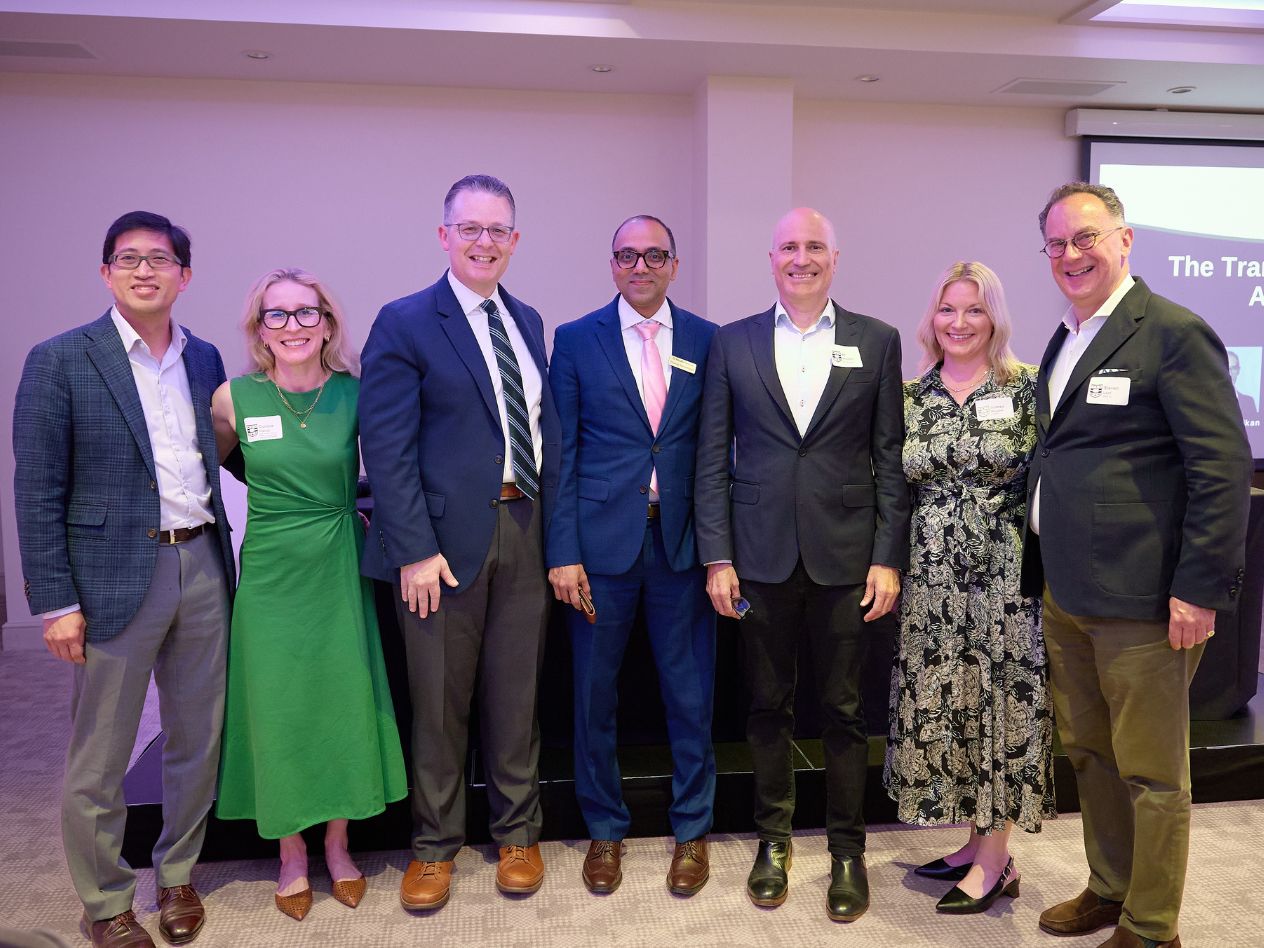
Leaders of WashU Medicine’s I2DB who have benefited from Olin executive education’s Advanced Management Certificate and/or Women’s Leadership Forum include: from left, Albert Lai, Cynthia Marich, Philip Payne, and (second from right) Andrea Krussel.
About the Author
Suzanne Koziatek
Media inquiries
For assistance with media inquiries and to find faculty experts, please contact Washington University Marketing & Communications.
Monday–Friday, 8:30 to 5 p.m.
Sara Savat
Senior News Director, Business and Social Sciences