Restaurant group multiplies its insights with CEL teams
- March 16, 2026
- By Suzanne Koziatek
- 5 minute read
Making impactful recommendations for WashU Olin’s regional partners is all in a day’s work for the Center for Experiential Learning (CEL).
During any one semester, nearly 50 CEL teams are busy collecting data, researching industries, and brainstorming new ideas for St. Louis-area businesses and nonprofits.
Some challenges are big enough to call for more than one team to see the solution through. And often, one CEL team’s success makes such an impact on a client that they come back for more insights from a new team.
Over the past five years, more than 16% of the center’s clients have been repeat customers, either as part of a larger project or by returning to the CEL for a different project, said Emily Richardson, director of the center’s business operations.
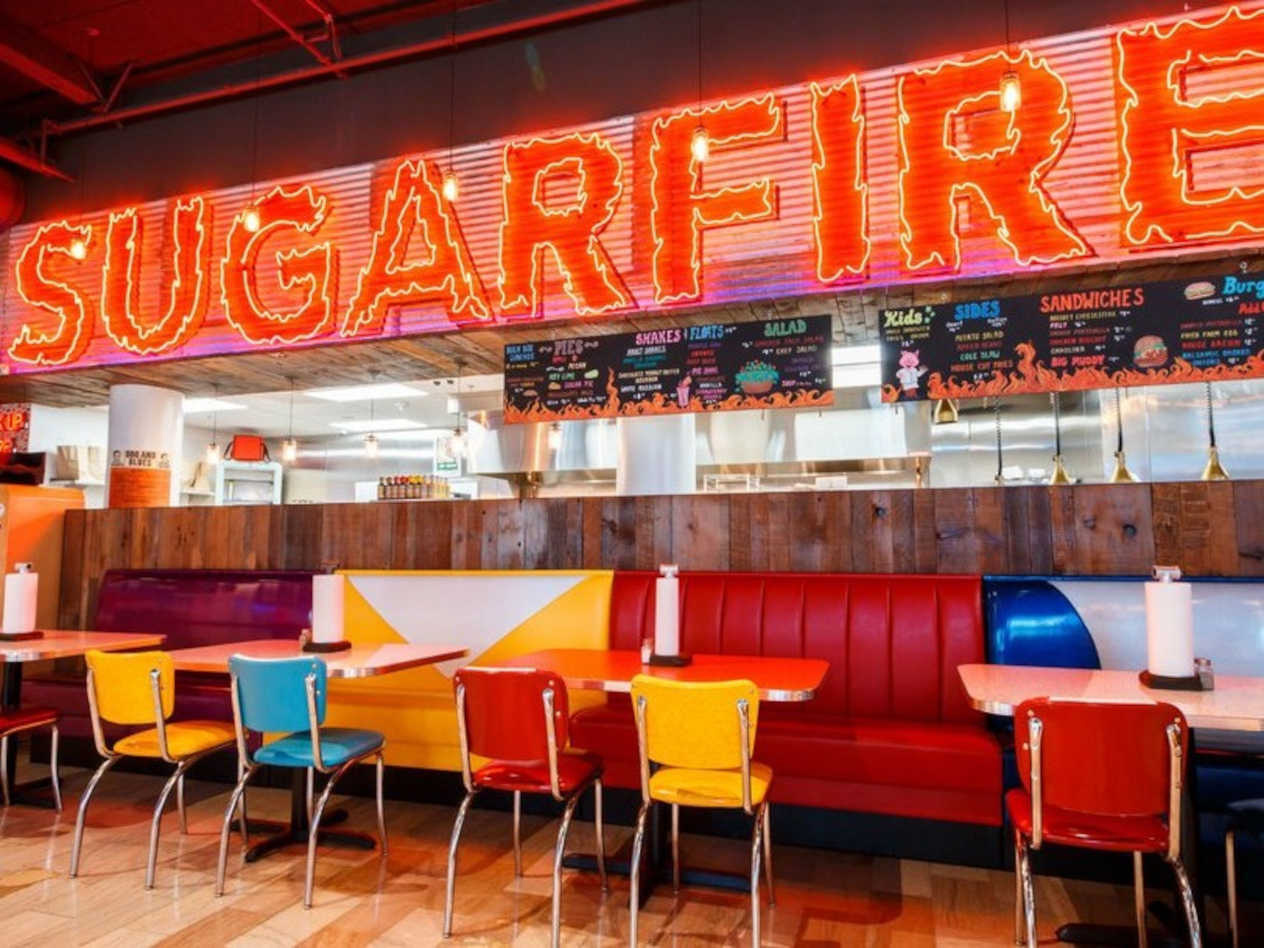
One of those repeat customers is Sugarfire Restaurant Group, a St. Louis company whose locations include several Sugarfire Smokehouse barbecue restaurants, as well as The Boathouse at Forest Park, Cyrano’s, and Sugarfire Pie. Owner Charlie Downs, who has been a St. Louis restaurateur for 46 years, wanted to develop a tool that would help restaurants track and control food costs simply and effectively.

Downs said that while there are products in the market that track this type of information, they tend to be overcomplicated and expensive, making them less suitable for small restaurants like those in his company.
“Our goal has been to simplify that program and make it applicable to small operators like me,” he said. “The majority of restaurants in our country are actually small.”
Working with his fractional CFO, Ismail Ghodbane, MBA 2020 (himself a former CEL team lead), Downs enlisted the help of three teams of CEL students, from spring semester 2024 through spring semester 2025.
"I knew (the CEL) was a great organization that could help local businesses,” Ghodbane said. “And we thought this was a great jump-start for fine-tuning whether our idea would be real-world applicable.”
With the CEL’s consulting help, Sugarfire developed the tool that the organization’s restaurants currently use.
Downs found great value in consulting with multiple groups of Olin students as they worked toward this shared goal.
“One of the best parts of it is that we got a lot of great minds on our project — different eyes and different ideas,” Downs said. “I'd like to have different groups of students in my business all the time.”
One of the best parts of it is that we got a lot of great minds on our project — different eyes and different ideas. I'd like to have different groups of students in my business all the time.
Charlie Downs
A first bite at the challenge
The first CEL team that took on the project was led by Arpit Arya, MBA 2025. Arya said he worked on at least 10 CEL projects in some capacity during his time at Olin, consulting for industries that included health care, pet food, and manufacturing. He said his CEL work was among his favorite activities at Olin.

“That’s what you require out of consulting — you want to touch different industries and in those two to three months, you get to a good level of expertise,” Arya said.
His team’s piece of the Sugarfire puzzle was to help the company determine whether a simplified food cost tool could be marketed to restaurants outside the Sugarfire organization.
The team looked at competing tools, what smaller restaurants were looking for, and which types of restaurants might be a good fit for a trial run of a product.
They recommended that Sugarfire run a pilot program on a type of restaurant with fairly simple inventory needs: burger restaurants. “If they saw that as effective, then they could scale up their business to apply the same product across the different food industries as well,” Arya said.
The advantage of alignment
After the completion of that first CEL project, and a mini-project competition over the summer of 2024, a new team took on the Sugarfire challenge the following spring.

This team was advised by CEL Scholar Anthony Kifue, also MBA 2025 — and coincidentally, a good friend of Arya’s.
A CEL Scholar has a different role than a team lead; he or she manages multiple projects simultaneously, meeting with team leaders to ensure the projects are on track. Kifue likened the role to that of an engagement manager at a consulting firm.
Ghodbane said that team was tasked with developing a technological roadmap and cost assessment of building the food inventory tool.
Arya’s team passed along their documentation and research to the new CEL team. Throughout the project, Kifue had the advantage of Arya’s prior experience.
“I invited him for a session with the new team because alignment was very important,” Kifue said. “When you’re coming in mid-project as a new team, you need to know, for example, who is the best person to communicate with? What are the biggest pain points they saw? I think meeting with the first team really helped.”

Arya, who also served as a CEL Scholar during his time at Olin, said the scholars would meet regularly to discuss current projects, which gave him opportunities to talk with Kifue about Sugarfire. “I could help connect the dots,” Arya said.
The 2025 team laid out a proposed rollout of the food cost platform: Contracting developers to build it, pilot testing it within the Sugarfire restaurant family, and then marketing it to other small restaurants within St. Louis.
Downs and Ghodbane saw the wide variety of students who worked on their project as a great asset. They noted that the teams included some students who had actually worked in the restaurant space, while others were more technologically experienced. “They all brought different enriching perspectives,” Ghodbane said.
Downs and Ghodbane have since developed the food inventory tool and continue to refine it to make it more usable while keeping it streamlined. They said they are considering marketing it to other small restaurants.
“We’re looking to empower these small operators in the restaurant space,” Ghodbane said.
About the Author
Suzanne Koziatek
Media inquiries
For assistance with media inquiries and to find faculty experts, please contact Washington University Marketing & Communications.
Monday–Friday, 8:30 to 5 p.m.
Sara Savat
Senior News Director, Business and Social Sciences