WashU Olin Business of Health Spring Symposium
The future of health is here at Olin.
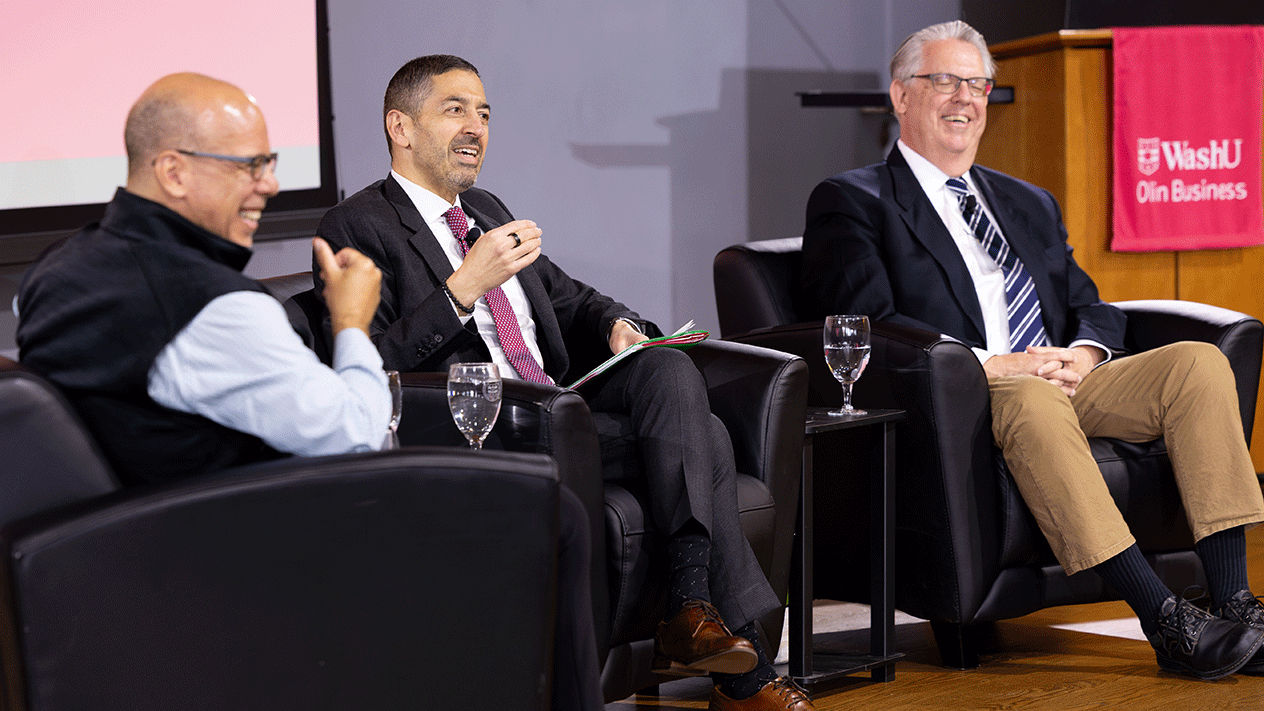 One year after the launch of WashU Olin’s bold initiative to elevate the business of health, its influence is resonating across WashU and beyond. The spring symposium reflects that momentum, convening researchers, industry leaders, and visionary partners to explore the full health landscape, from care delivery and public health strategy to breakthrough innovation. Just as powerful as the ideas exchanged are the connections formed, bringing together collaborators committed to advancing better health outcomes.
Past Symposiums
2026
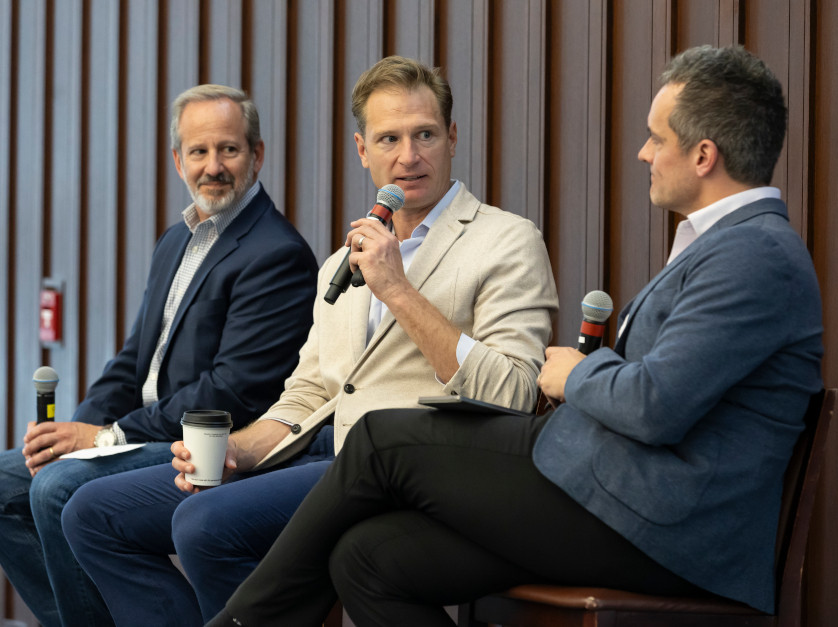
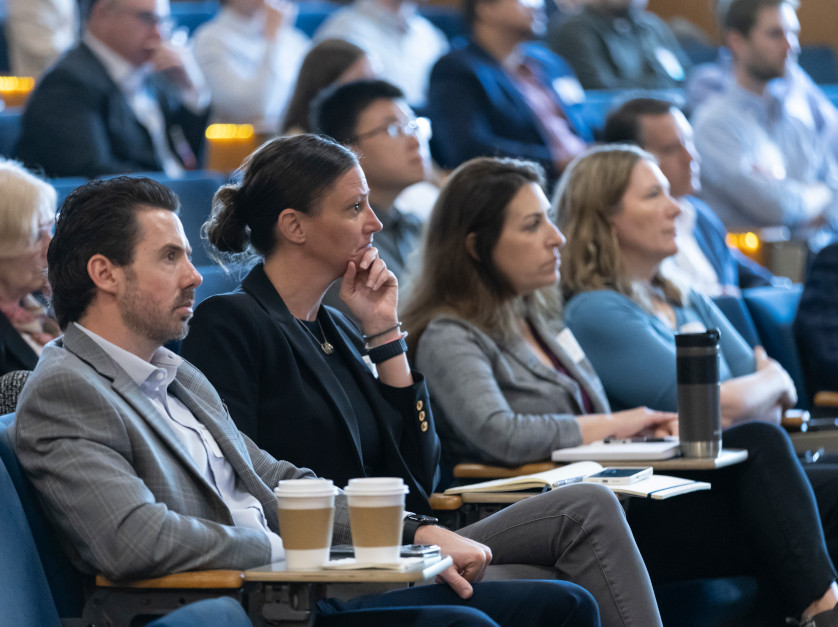
The Business of Being Well Symposium brought together industry leaders, researchers, and professionals to explore innovative approaches to improving healthcare systems and outcomes. The event focused on rethinking healthcare costs, strengthening workforce resilience, and using data and market strategies to promote healthier communities.
Keynote speaker Brian Whorley, founder and CEO of Paytient and an Olin alum, shared insights on how companies could redesign out-of-pocket healthcare costs and build partnerships that better support individuals’ health. He also highlighted the importance of empowering people to make informed healthcare decisions.
Margaret Kruk, MD, MPH, distinguished Endowed Professor of Health Systems & Medicine and University-wide QuEST Center Director, shared insights during the Symposium’s Health Decoded case-based presentation. She discussed her work leading a commission of researchers and global health leaders focused on identifying regional interventions that have successfully improved the quality of care in low- and middle-income countries.
I attended WashU Olin's Business of Being Well Symposium today and left with more to think about than I expected. What is the biggest gap between what consumers want and what the industry focuses on? It is prevention. 65% of consumers want a prevention-first system while the industry is still optimizing for efficiency.
—Sridharan Gopalsamy Ramaswamy, MPH, MBA
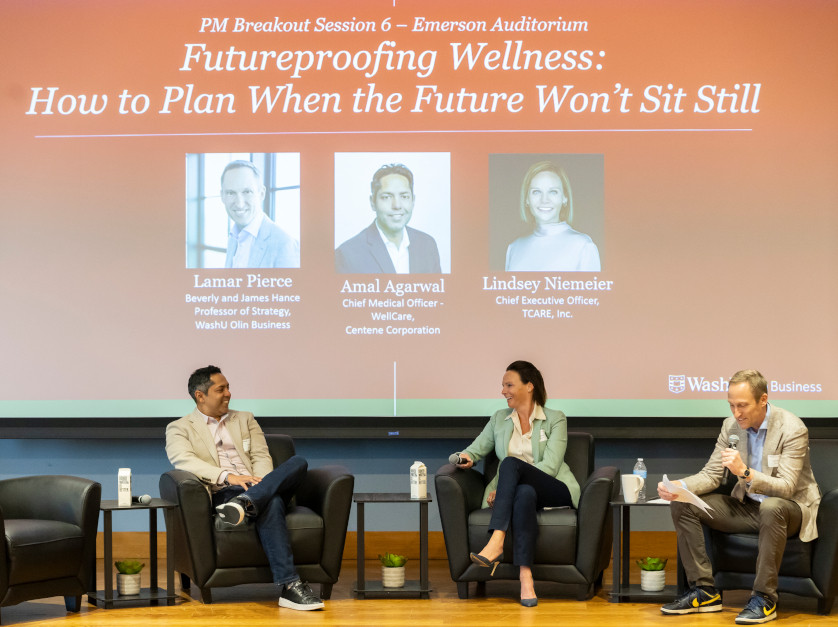
Breakout sessions explored topics such as consumer trust in the wellness economy, the impact of private investment on healthcare outcomes, and strategies for navigating uncertainty in a rapidly evolving healthcare landscape.
Throughout the symposium, speakers and sessions examined how healthcare organizations could move from reactive to proactive models. Discussions emphasized the use of data and AI to predict health risks, the role of consumer beliefs in medical decision-making, and the need to address burnout by building systems that support frontline workers holistically.
Overall, the symposium highlighted the importance of integrating organizational, clinical, psychological, and market-based perspectives to create more resilient, equitable, and forward-thinking healthcare systems.
View photos from the Spring Symposium
WashU Olin is collaborating across industry sectors to promote and accelerate groundbreaking health innovations.

2025
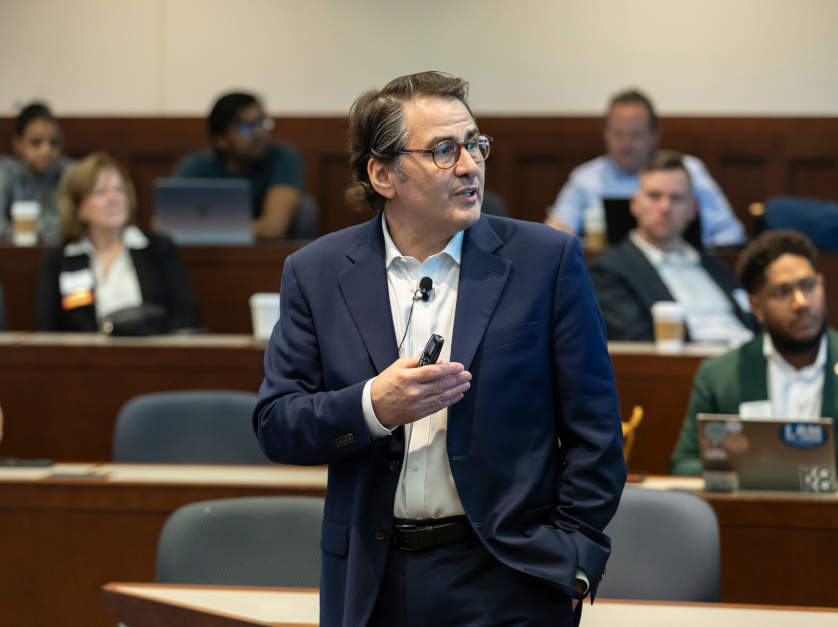
Olin convened leading voices from translational science, public health, and biotech entrepreneurship for a dynamic exchange centered on one powerful idea: cross-sector collaboration is the key to accelerating breakthrough health innovation. The event included an extraordinary lineup — including Professors Lamar Pierce and Bart Hamilton, Dean Michael Mazzeo, Chancellor Andrew D. Martin, Dr. Eric Leuthardt, Dean Sandro Galea, among others — to share insights and showcase the transformative power of the business of health.
Here's what people were saying about the symposium and Olin's commitment to the Business of Health.
I’m excited that Olin is supporting this intersection between business and health. I think it’s the answer to moving forward in healthcare. And I could not be more excited to be part of this and to watch this happen.
—Alison Gildehaus, EMBA 2024, Chief Medical Officer for External Affairs, Mid-America Transplant
All of the rich disciplines that we find at Olin — efficiency, good operations, organizational behavior — can inform the way clinicians learn, but also the way the healthcare system functions and how we can leverage real learning to progress into the next phase of what we do and how we care for patients.
—John Schneider, Associate Professor of Otolaryngology–.Head and Neck Surgery Chief, Division of Rhinology and Assistant Dean for Faculty Coaching, WashU Medicine
Connecting the Health Sector
Olin is deeply engaged with a full spectrum of health business interests — from healthcare to public health and beyond. Hear what attendees shared about the Spring Symposium.